This article contains affiliate links (PR).
Last checked: November 19, 2026. Winter access is from the Noboribetsu International Tourism and Convention Association (Noboribetsu’s tourist association) and the Natural Parks Foundation’s Noboribetsu branch, which runs the parking lots. Road closures are from Noboribetsu City’s winter closure list. Bus times and fares are from Donan Bus’s English route pages.
Noboribetsu Jigokudani (登別地獄谷, “Hell Valley”) stays open all winter. Entry is free, there are no opening hours, and the main observation deck is a 3–5 minute walk from the parking lots. What changes in winter is everything beyond the valley: the road to Lake Oyunuma and Lake Kuttara is closed from November 9, 2026 to April 16, 2027, and the Oyunuma parking lot from late November to late April, so Lake Oyunuma, Lake Kuttara, Okunoyu and Mt. Hiyori drop out of a winter visit, and the Oyunuma River Natural Footbath can be reached only from the entrance on the Sekisuitei side.
Allow about 30 minutes for the valley alone and about an hour if you add the footbath. Both are walkable from the hotels in Noboribetsu Onsen, so a car is not needed.
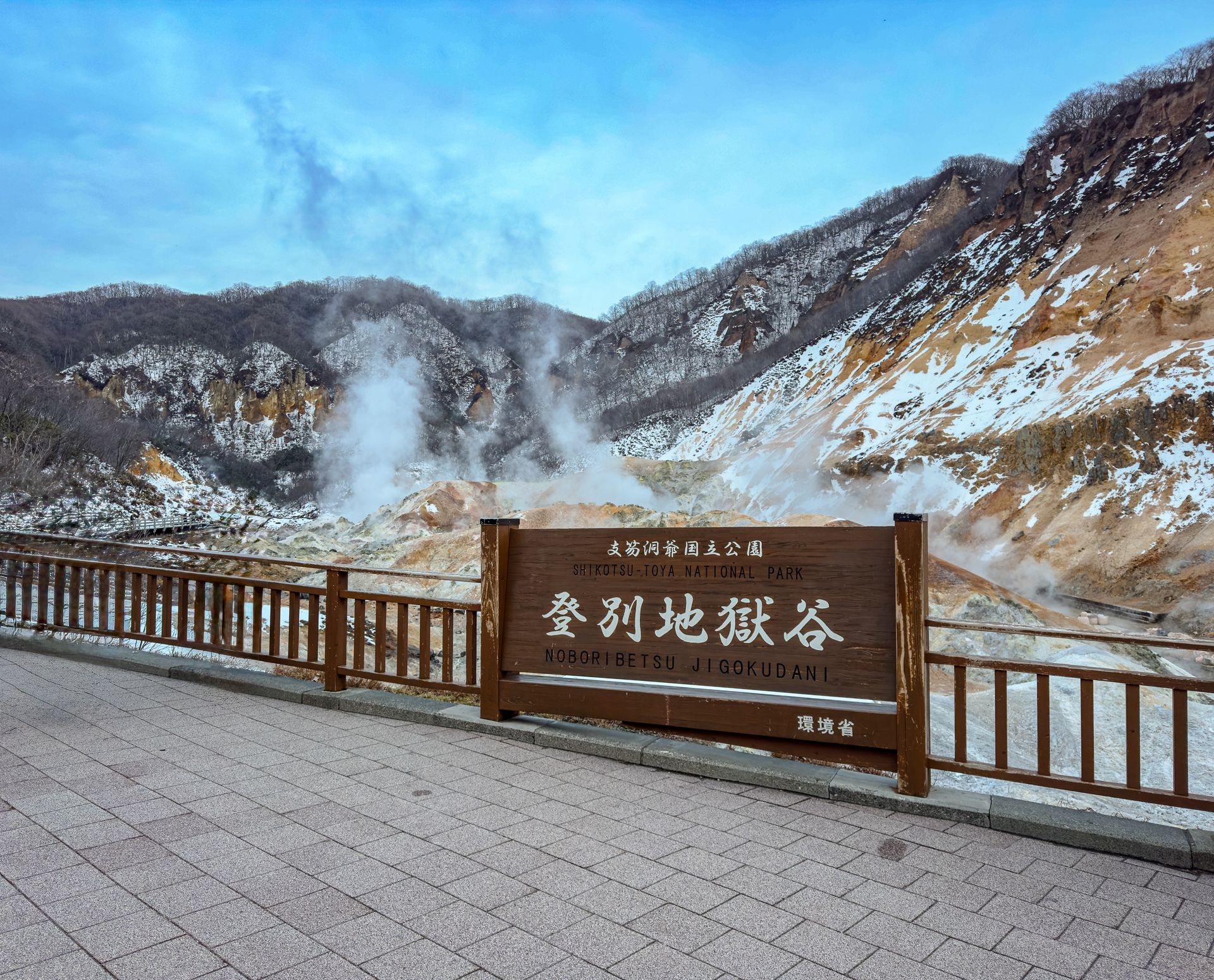
Photo: Jatin Chadha / Pexels
Quick answer
In winter, Noboribetsu Jigokudani is reduced to two stops: the valley itself and the Oyunuma River Natural Footbath. Everything reached from the closed Oyunuma parking lot is off the winter route.
| Place | In winter (checked November 19, 2026) | Official source |
|---|---|---|
| Jigokudani observation deck | Open. Free, no opening hours; 3–5 minutes on foot from the parking lots | Natural Parks Foundation FAQ; tourist association winter notice |
| Boardwalk toward Tessen Pond | How far it stays open in winter is not stated. Follow the ropes and signs on site | Tourist association (not stated) |
| Oyunuma River Natural Footbath | Open in the latest winter notice, from the Sekisuitei-side entrance only | Tourist association winter notice (December 27, 2023) |
| Lake Oyunuma | Closed. Route 350 is closed from the Oyunuma gate November 9, 2026 to April 16, 2027; the Oyunuma parking lot is closed late November to late April | Noboribetsu City; Natural Parks Foundation |
| Okunoyu and Mt. Hiyori | Their parking is the Oyunuma lot, listed as closed in winter; the city road to Okunoyu is closed December 1, 2026 to April 16, 2027 | Tourist association spot pages; Noboribetsu City |
| Lake Kuttara | Route 350, the road to the lake, is closed November 9, 2026 to April 16, 2027 | Noboribetsu City |
| Jigokudani parking lot | Open in winter. ¥500 per car, collected about 8:00–17:00; free outside those hours | Natural Parks Foundation |
Sources: tourist association winter trail notice (Japanese), Natural Parks Foundation, Noboribetsu branch (Japanese), Noboribetsu City, winter road closures (Japanese, with a list and map), tourist association spot pages (English).
The tourist association’s notice on winter trail closures is dated December 27, 2023, and it is still the latest one on its news page as of November 19, 2026. No new trail notice was posted for the 2024–25 or 2025–26 winters, and none had been posted for 2026–27; this winter’s road closures are on Noboribetsu City’s list (see below). The notice describes the situation “as of December 27” and says it may change with snow and ice, so check the association’s news page (Japanese, some notices with English titles) shortly before you go.
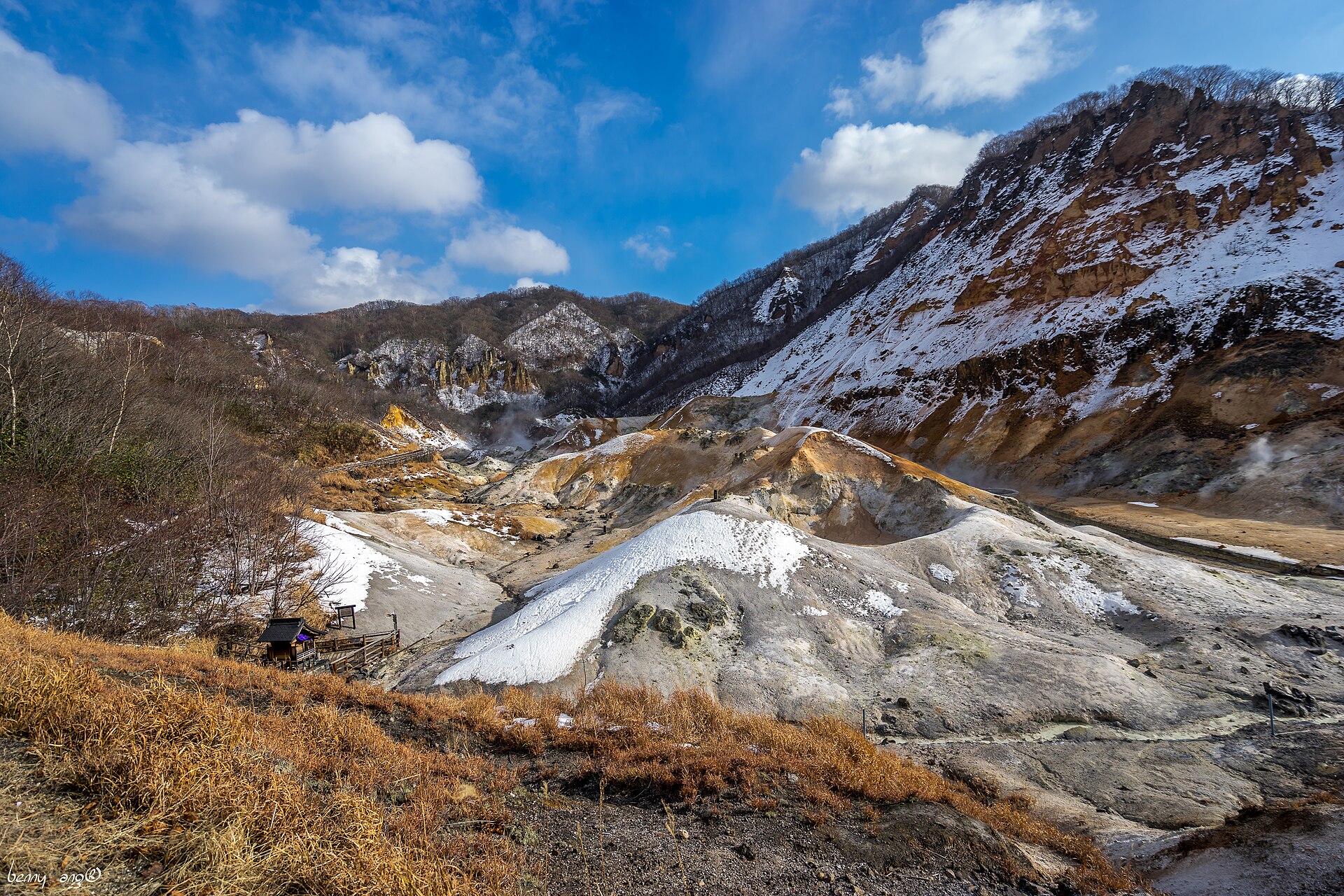
Photo: Benny Ang / CC BY 2.0 / Wikimedia Commons
What you can walk to in winter
Noboribetsu Jigokudani in winter means the observation deck, the boardwalk into the valley as far as it is open, and the Oyunuma River Natural Footbath. All three start from the onsen town on foot.
Jigokudani observation deck
Jigokudani is an explosion crater about 450 m across and 11 hectares in area, formed by Mt. Hiyori. Vents and fumaroles line the valley, and about 10,000 tons of hot spring water a day comes out here and is piped to the hotels and ryokan in town, according to the tourist association. In winter the white of the snow and the steam sits against bare reddish-brown slopes.
The Natural Parks Foundation says each parking lot is a 3–5 minute walk from the Jigokudani observation deck. A wheelchair ramp (maximum slope 8%) runs from the Park Service Center to the deck. In winter the ramp can be snowy or icy like any other path.
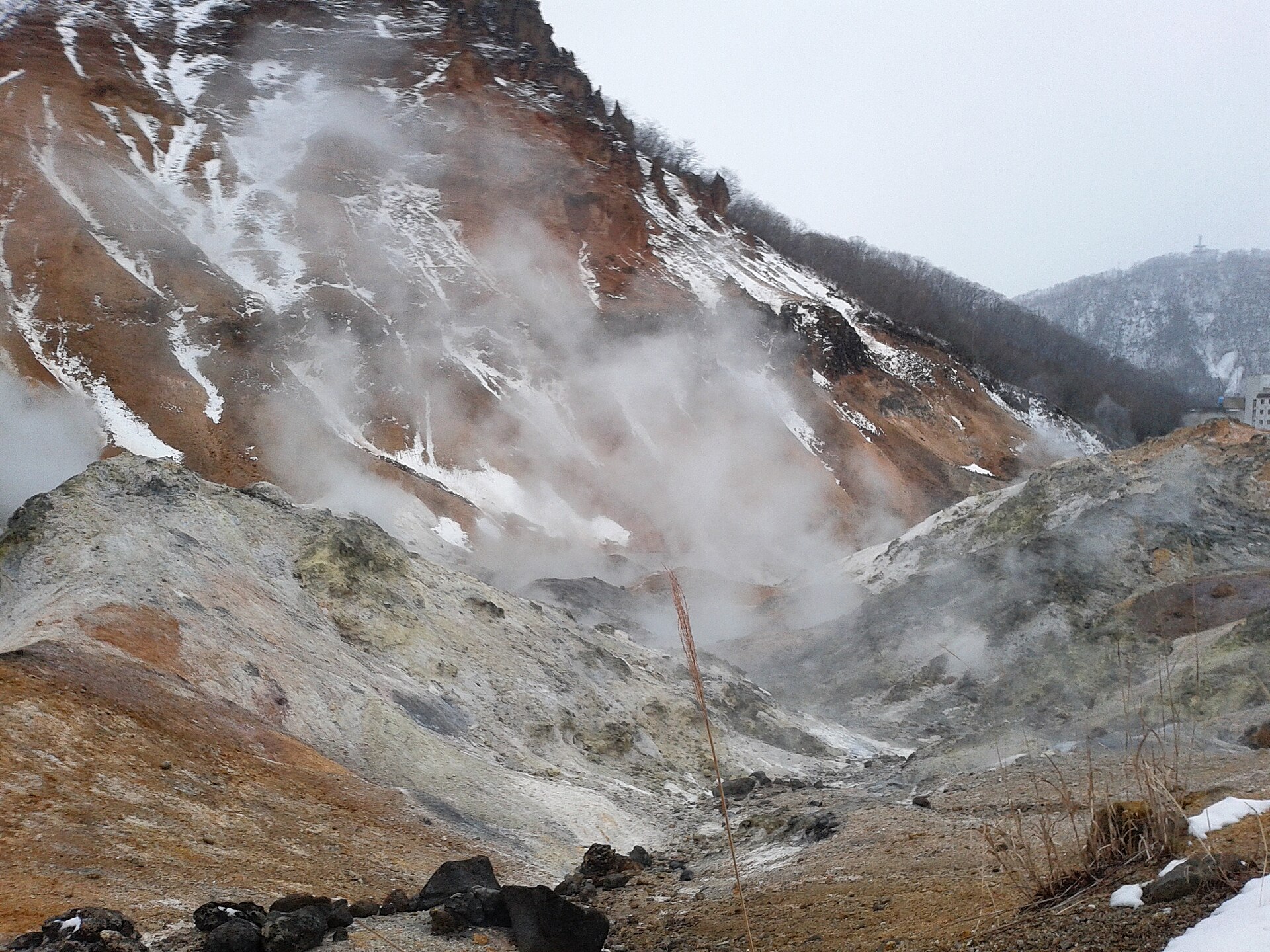
Photo: Prosperosity / CC BY-SA 3.0 / Wikimedia Commons
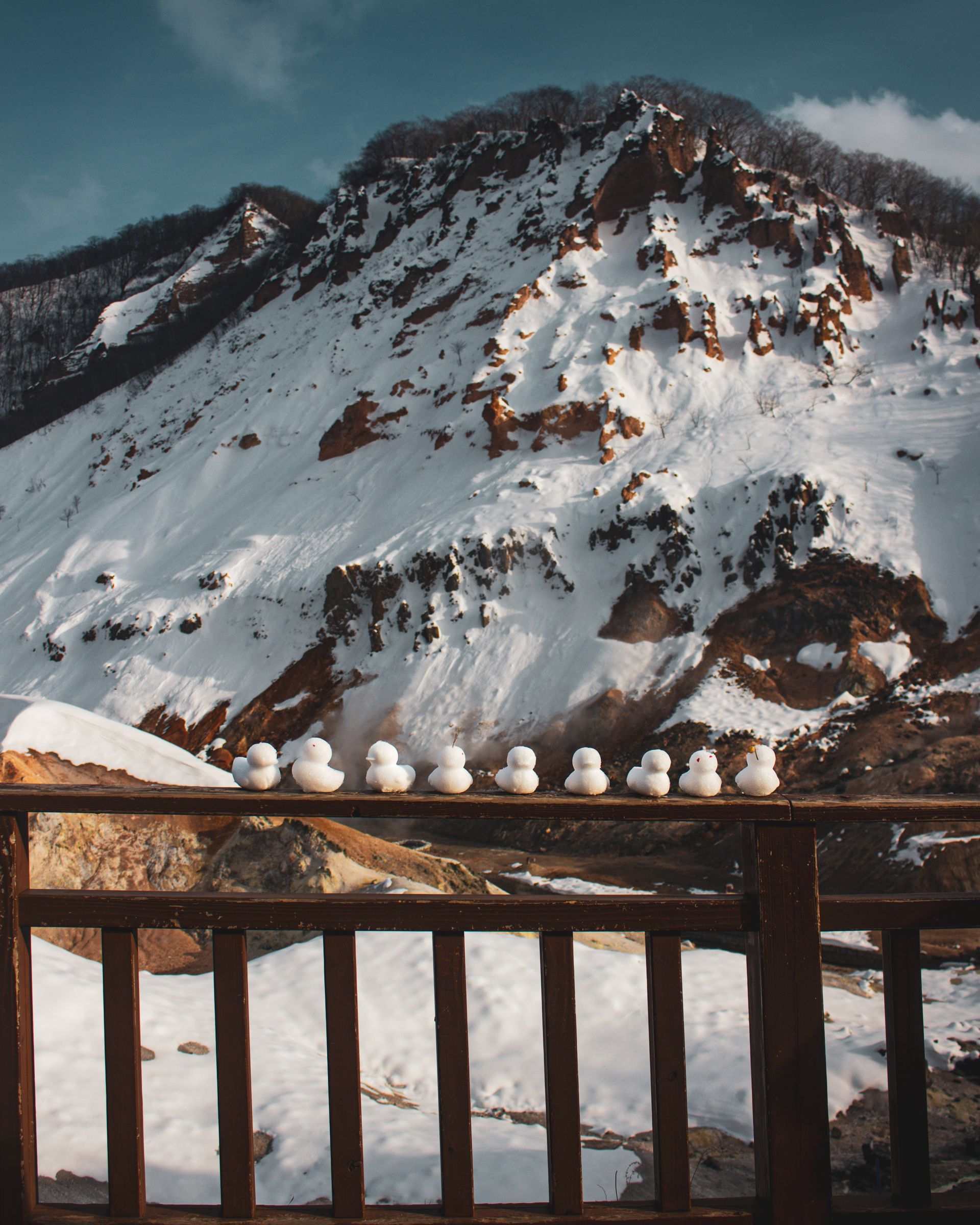
Photo: Jim (Jimothy) Natanauan / Pexels
The boardwalk toward Tessen Pond
Tessen Pond (鉄泉池) is a small geyser near the middle of Jigokudani, reached by a wooden path along a stream of hot water. The tourist association notes that it no longer spouts as much as it used to. The winter notice says Jigokudani can be visited but does not say how far into the valley the boardwalk stays open, so where you meet a rope or a closed sign, turn back there.
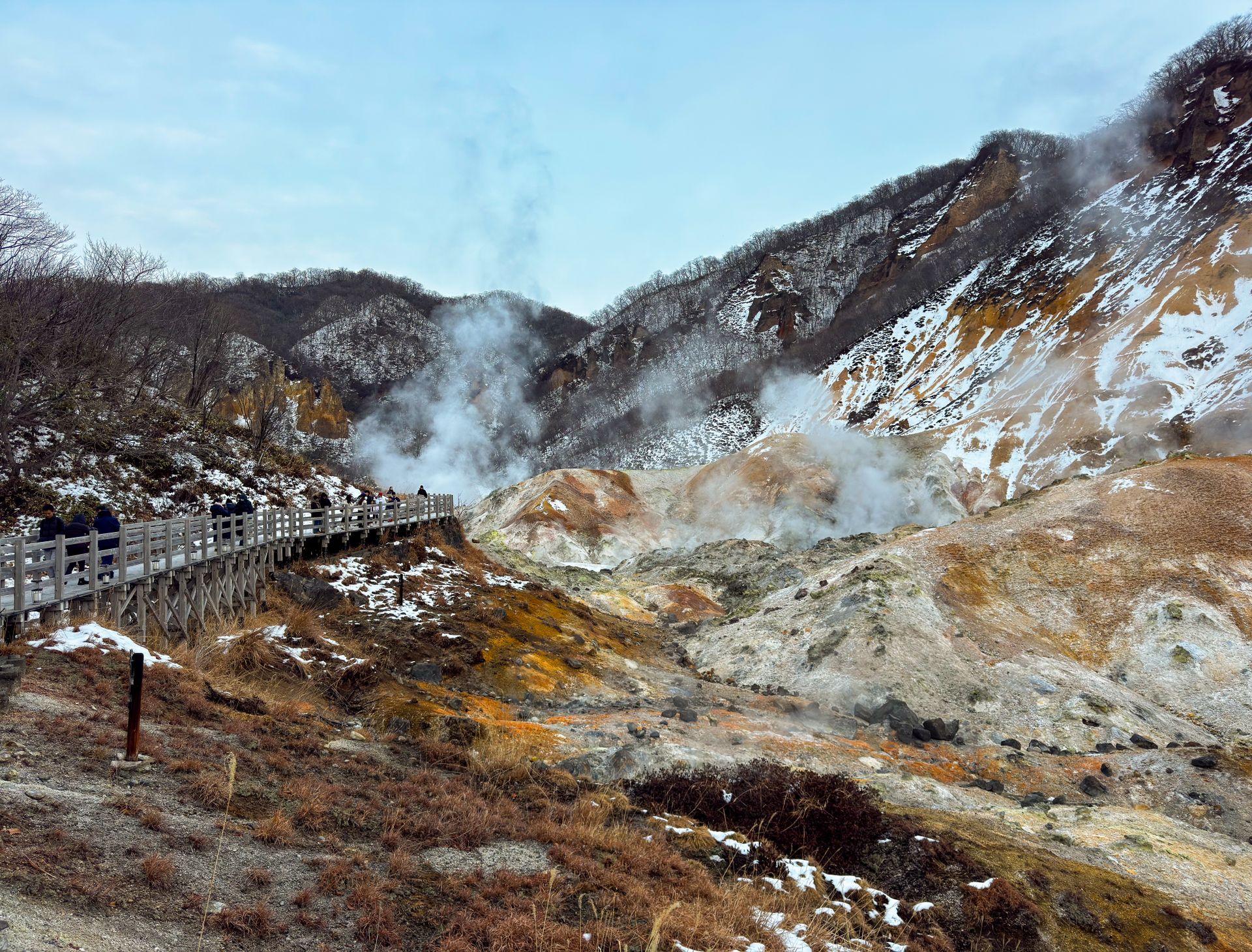
Photo: Jatin Chadha / Pexels
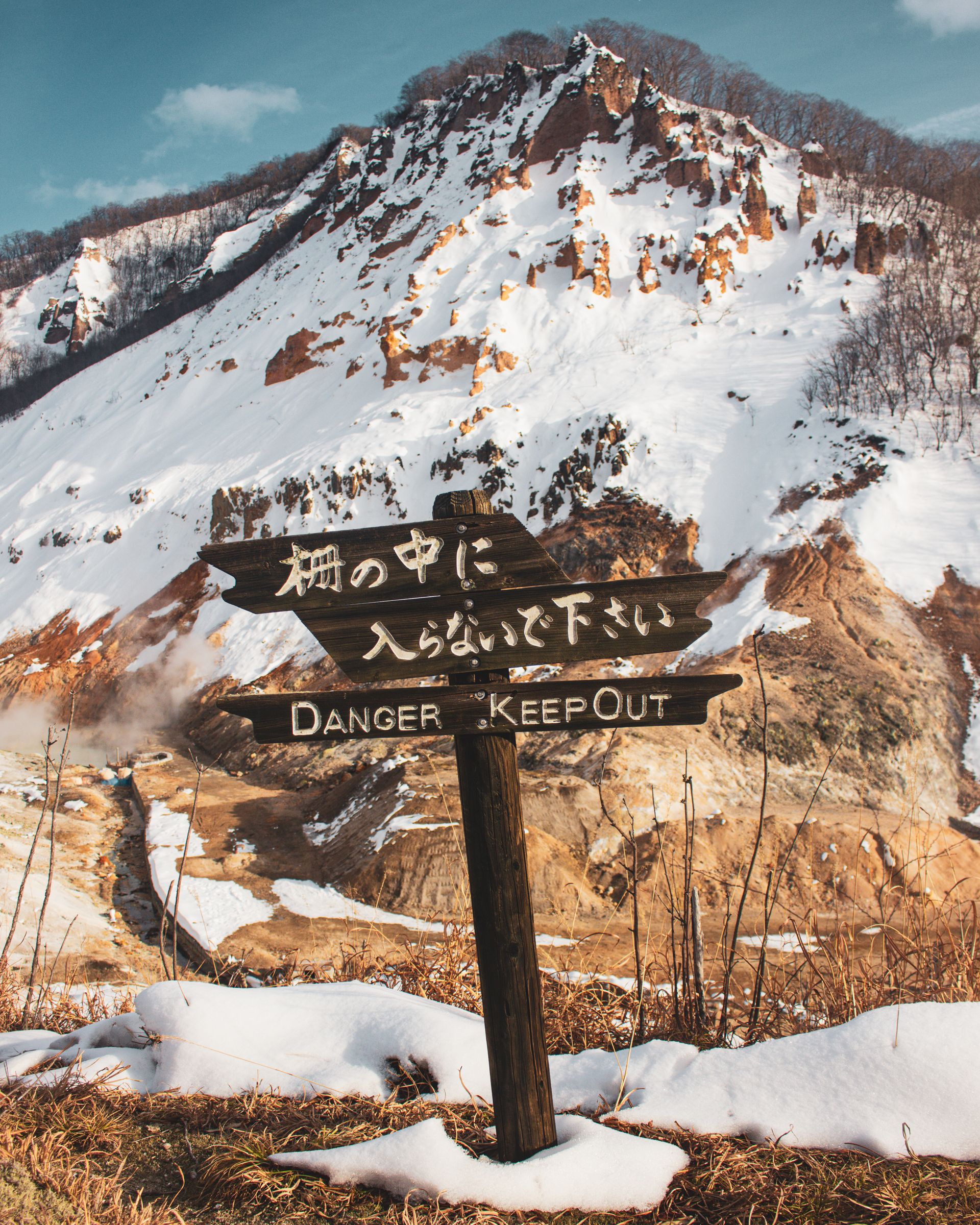
Photo: Jim (Jimothy) Natanauan / Pexels
Oyunuma River Natural Footbath (Sekisuitei-side entrance only)
The Oyunuma River Natural Footbath (大湯沼川天然足湯) is a free footbath in a warm stream that flows out of Lake Oyunuma, next to Taisho Jigoku on the Oyunuma River scenic trail. It has two entrances: one on the Sekisuitei side (Sekisuitei is a hotel in the onsen town) and one on the Lake Oyunuma side. The winter notice says only the Sekisuitei-side entrance is passable, so the summer loop down from Lake Oyunuma does not work; walk in and out the same way.
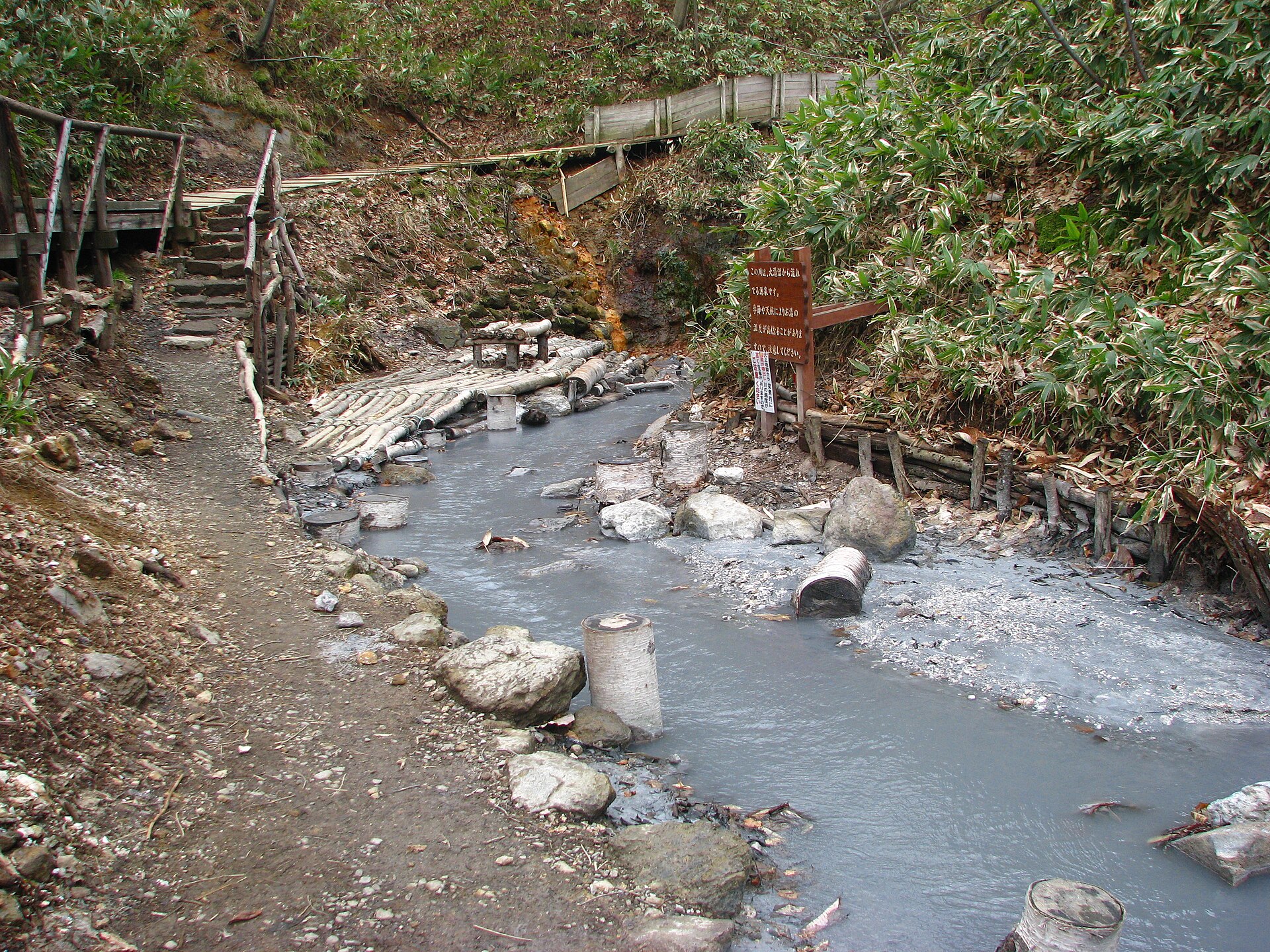
Photo: XT / CC BY 3.0 / Wikimedia Commons
What is closed in winter
Lake Oyunuma, Lake Kuttara (倶多楽湖), Okunoyu and Mt. Hiyori are closed to winter visitors because the road that serves them is closed. Noboribetsu City lists Hokkaido Route 350 (Kuttara Lake Park Line, 倶多楽湖公園線) as fully closed from the Oyunuma gate in Noboribetsu Onsen to the Naka-Noboribetsu gate from November 9, 2026 to April 16, 2027, and from December 1, 2026 the closure starts at the Jigokudani gate. That takes out Lake Kuttara, the usual second stop on the association’s driving courses, as well as the Oyunuma parking lot.
Lake Oyunuma
Lake Oyunuma (大湯沼) is a gourd-shaped crater lake about 1 km around. Sulfur springs at about 130°C spout from its bottom, and even the surface is about 40–50°C. The Natural Parks Foundation states that the Oyunuma parking lot closes during the winter period (late November to late April) because the road is closed, and the tourist association’s winter notice does not list the lake among the places you can visit. If Lake Oyunuma is a priority, plan the trip outside that period.
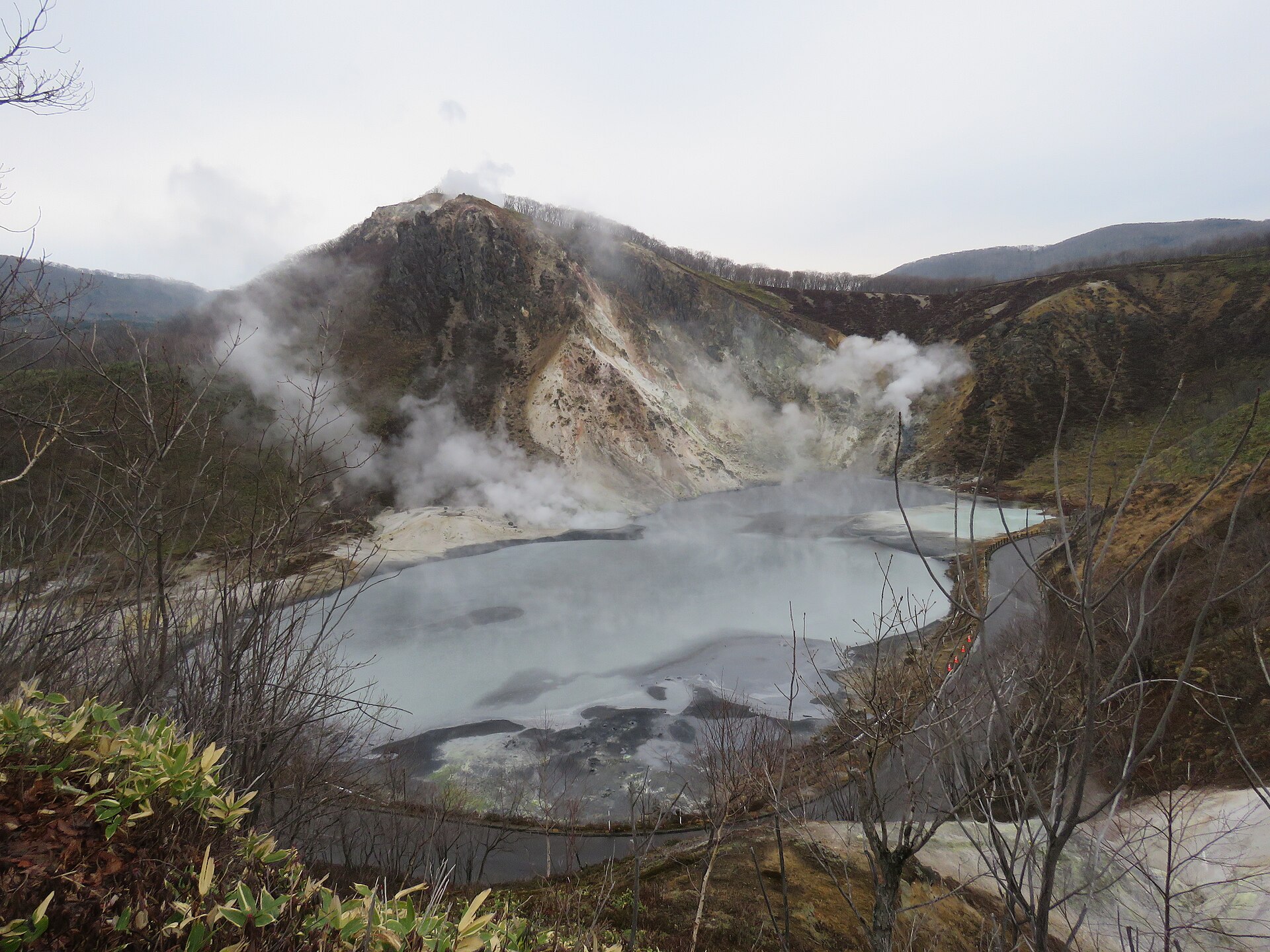
Photo: Calistemon / CC BY-SA 4.0 / Wikimedia Commons
Okunoyu and Mt. Hiyori
Okunoyu (奥の湯) is a pond inside part of Mt. Hiyori’s crater, where grayish-black sulfur water at about 75–85°C bubbles up. Mt. Hiyori (日和山) is a 377 m active volcano that still gives off white smoke. The tourist association lists the parking for both as “Oyunuma parking lot (closed in winter)”, so neither works as a drive-up stop in winter. The city road to Okunoyu (大湯沼1号線) is also closed from December 1, 2026 to April 16, 2027.
How long to walk Jigokudani in the snow
Walking Noboribetsu Jigokudani in winter takes about 30 minutes for the valley alone and about an hour with the footbath. Only the tourist association’s 30-minute course works in winter as written; its driving courses go through the closed Oyunuma parking lot.
| Official model course | Mode | Route (as published) | In winter |
|---|---|---|---|
| Simple Nature Walking Course (30 min) | Walking | Noboribetsu Jigokudani, 20-minute stay | Works as written |
| Literature Walking Course (60 min) | Walking | Daimoku Stone, Natatsukuri Kannon statue, Yakushinyoraido, Tessen Pond, two poetry monuments, with a stop at the footbath | The footbath has one winter entrance, so the published route may not be walkable in order |
| Jigokudani and Lake Kuttara Course (60 min) | Car | Mt. Hiyori (20 min), 20 minutes by car, Lake Kuttara Senkei Observatory (20 min) | Mt. Hiyori’s parking (the Oyunuma lot) is closed |
| Deluxe Jigokudani Course (120 min) | Car | Lake Oyunuma (30 min), Lake Kuttara Senkei Observatory (30 min), Shinnoboribetsu Ohashi Bridge (30 min) | The Oyunuma parking lot is closed |
Source: tourist association model courses (English), checked November 19, 2026.
For planning, use these times:
- Jigokudani only: about 30 minutes. This is the association’s 30-minute course and fits before check-in or before dinner.
- Jigokudani plus the footbath: allow about an hour. No official time is published for this winter combination; the extra margin covers the out-and-back walk from the Sekisuitei-side entrance, drying your feet, and slower walking on packed snow.
- Lake Oyunuma, Lake Kuttara and the other driving stops: not possible as a winter loop. Visit them outside the winter road closure, which this season runs from November 9, 2026 to April 16, 2027.
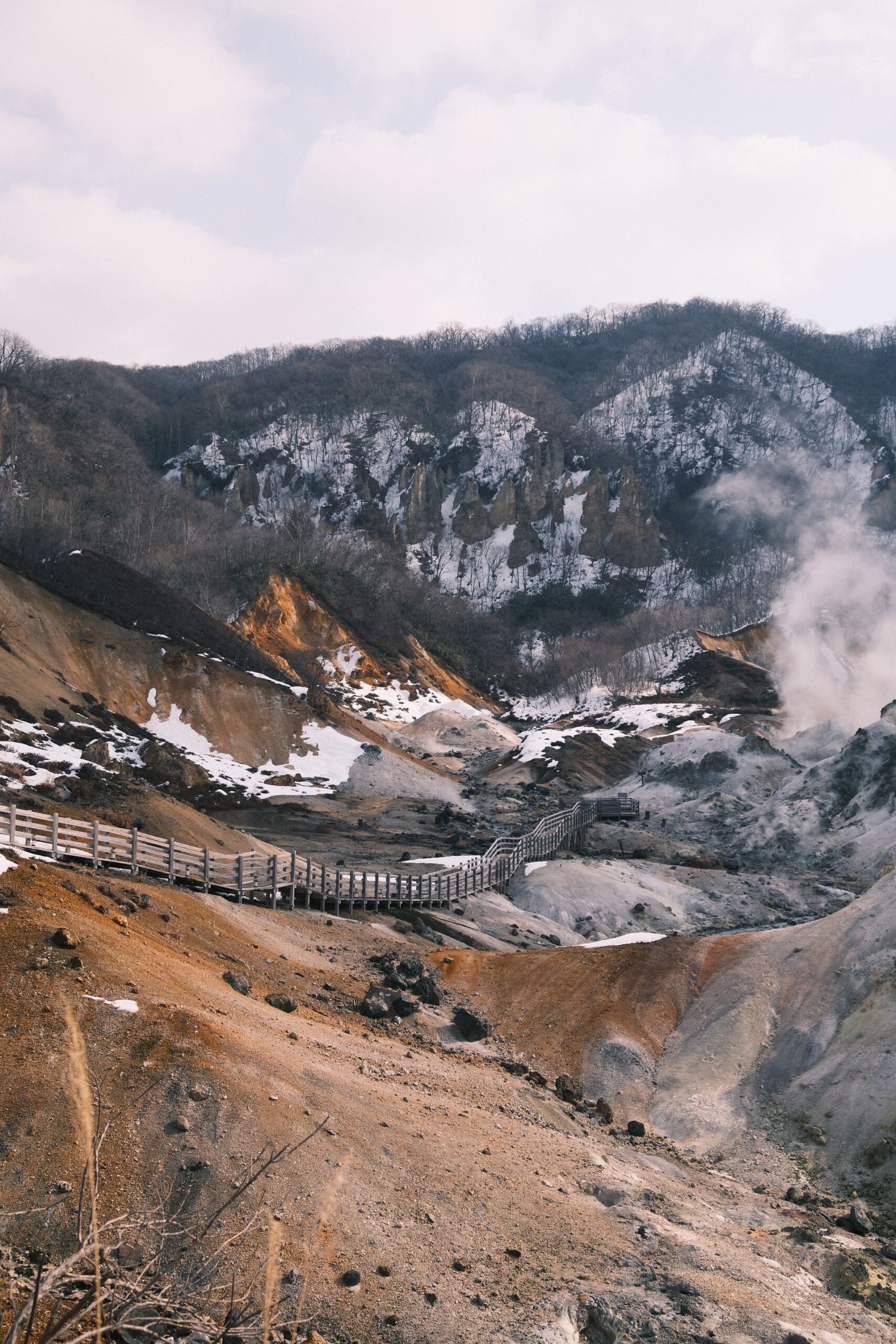
Photo: zhen ciang huang / Pexels
Visiting at night and event closures
Noboribetsu Jigokudani can be visited at night in winter too, which suits overnight guests who arrive in the afternoon. The Natural Parks Foundation says parts of the valley are lit at night and footlights line the path from the observation deck to Tessen Pond.
The tourist association’s English pages give two sets of hours. The Onibi no Michi lantern path (鬼火の路) along the Jigokudani walking trail and observatory is lit from sunset to 21:30 all year, and the lights at the observatory stay on until around 23:00. The area is not locked, but the association recommends going before sunset if you want to see the valley itself clearly.
Jigokudani is sometimes closed for a few hours for events, announced on the association’s news page. Past winter examples:
- February 2 and 3, 2024, 15:00–18:30: closed to visitors for an event.
- January 27–30, 2025, 18:00–21:00: closed for a paid event.
No closure for winter 2026–27 had been posted as of November 19, 2026. If an evening walk in the valley is part of the plan, check the news page again once your dates are fixed.
Staying in Noboribetsu Onsen puts the valley a short walk from the hotel door, so the lit boardwalk can wait until after dinner. Klook lists the hot spring town’s hotels and ryokan, including Dai-ichi Takimotokan, Hotel Mahoroba and Noboribetsu Grand Hotel, with English booking.
Getting there
Noboribetsu Onsen is about 1 hour 15 minutes from New Chitose Airport by direct bus, or about an hour by train plus a short bus ride. From the bus stops in the onsen town, Jigokudani is a walk; the association’s 30-minute course is done on foot.
| From | How | Time and fare (as published) |
|---|---|---|
| New Chitose Airport | Express Noboribetsu Onsen Airport-go (Donan Bus), reserved seats only | About 1 hr 15 min; ¥1,900–2,400 one way. Departs the international terminal (stop 86) at 13:20, 14:10 and 15:10, and the domestic terminal (stops 29 and 2) a few minutes later |
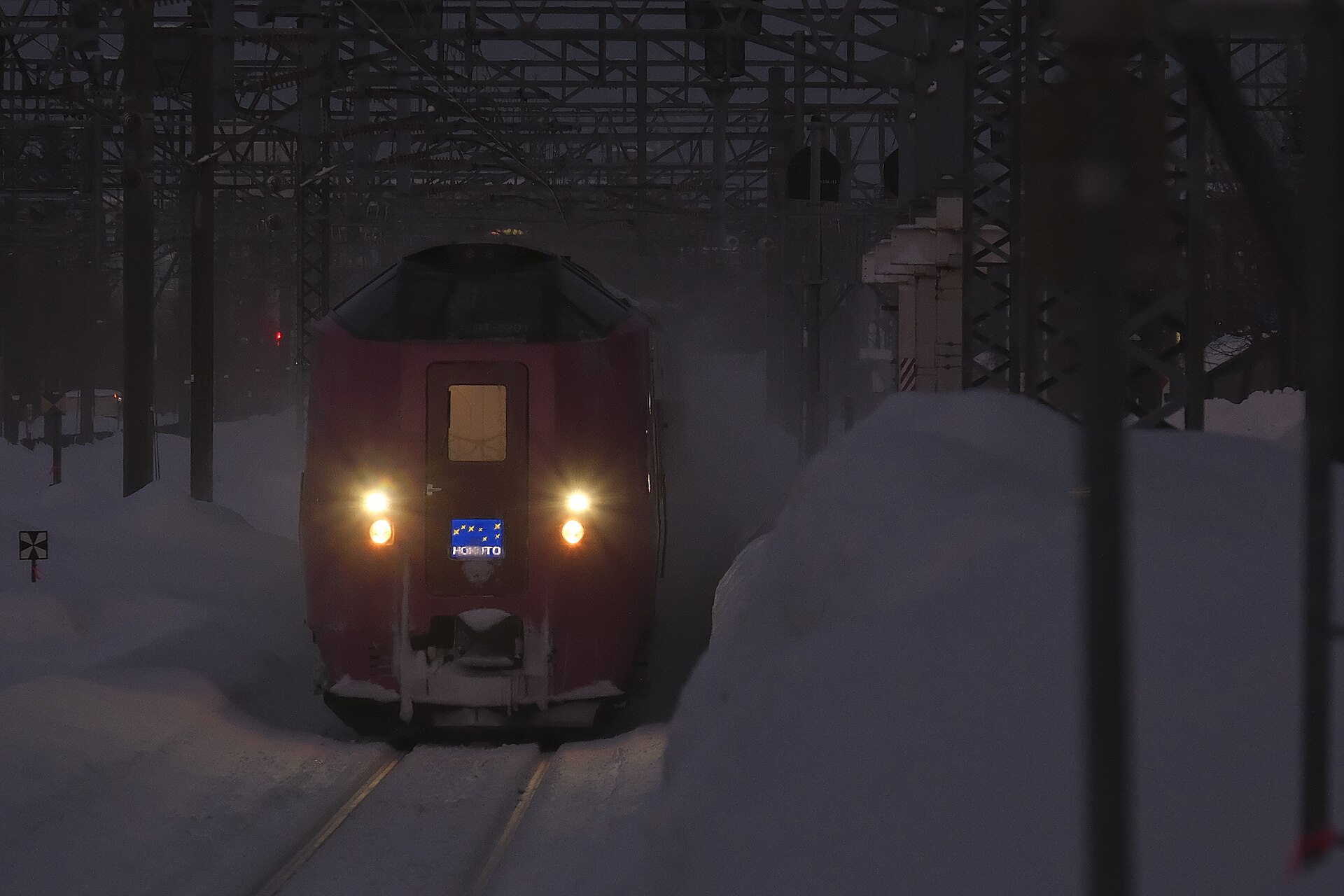
| New Chitose Airport | JR Rapid Airport to Minami-Chitose, limited express Hokuto or Suzuran to Noboribetsu Station, then Donan Bus | About 3 min + about 40 min by train, then about 15–20 min by bus (¥450) |
| Sapporo | JR limited express Hokuto or Suzuran to Noboribetsu Station, then Donan Bus | About 1 hr 10 min by train, then about 15–20 min by bus |
| Sapporo | Express Onsen-go (Donan Bus), reserved seats only | Sapporo Station stop 7 at 13:40, Noboribetsu Onsen at 15:20; ¥2,800–3,800 one way |
| By car | Do-O Expressway to Noboribetsu Higashi Interchange | About 6 km from the interchange to the onsen town; Jigokudani parking ¥500 |
Sources: Donan Bus, airport bus, Donan Bus, Sapporo bus, Donan Bus, Noboribetsu Station to the onsen, tourist association access page (all English); train times from the association’s access FAQ (Japanese). Checked November 19, 2026.
Book the airport bus online in advance: Donan Bus takes reservations up to 120 minutes before departure. Going back, the airport bus leaves the Noboribetsu Onsen stop at 9:55, 10:30 and 11:45 and reaches the international terminal at 11:00, 11:53 and 12:50. The page still shows last winter’s extra-bus dates, so check it again for 2026–27 extra runs. If your flight lands too late for the 15:10 bus, take the train and the local bus instead.
On the Donan Bus between Noboribetsu Station and the onsen town, IC cards such as Kitaca and Suica cannot be used, and Visa touch payment works only on the buses marked NA and NB. Carry cash for the ¥450 fare.
Driving is possible: the Natural Parks Foundation, which runs the parking lots, lists only the Oyunuma lot as closed in winter, and the Jigokudani lot stays open (¥500 per car, collected about 8:00–17:00, free at night and early morning). In summer the same ticket also covers the Oyunuma lot; that shared use does not apply in winter. If you have not driven on snow before, read Driving in Hokkaido in winter first.
Without a car, a guided day tour from Sapporo is another option. One Sapporo day trip on Klook runs a winter route from November to March that stops at Jigokudani along with Lake Toya and Showa-Shinzan, in about 10 hours. Time at Jigokudani is set by the tour, so check the itinerary if the footbath is on your list.
Tips for international visitors
For a winter visit to Noboribetsu Jigokudani, the practical issues are the train fare, luggage on arrival day, and footing on packed snow. The Sapporo-Noboribetsu Area Pass covers JR trains only, the Noboribetsu Tourist Information Center stores bags for ¥500–700 a piece, and waterproof boots with a grippy sole are the minimum on the slopes.
- Rail pass: JR Hokkaido’s Sapporo-Noboribetsu Area Pass covers JR trains between New Chitose Airport, Sapporo, Otaru and Noboribetsu for 4 consecutive days, at ¥10,000 bought before arrival or ¥11,000 at a station (adults, as of November 19, 2026). All limited express seats are reserved, so get a seat reservation before boarding. JR Hokkaido puts a regular Sapporo–Noboribetsu round trip at ¥9,780. The pass covers JR only, so the Donan Bus from Noboribetsu Station is paid separately. Details are on the JR Hokkaido rail pass page.
- Luggage: the Noboribetsu Tourist Information Center in the onsen town (Noboribetsu Onsen-cho 60) stores bags for ¥500–700 a piece, 9:00–16:30, with staff speaking Japanese, English, Chinese and Korean. It has no regular closing day, but the service was suspended during events in past winters (January 31 to February 5, 2025, and February 1 to 5, 2026). Over last New Year (December 30, 2025 to January 3, 2026) bags were taken only 10:00–15:00, with no service on January 1. See the baggage storage page.
- Footwear: packed snow and ice make the slopes slippery. Waterproof boots with a grippy sole are the minimum; slip-on ice cleats help on the boardwalk.
- Footbath: bring a small towel and dry socks. Walking back on snow with damp feet gets cold quickly.
- Weather: at most of the Hokkaido weather stations the Japan Meteorological Agency tracks, lasting snow cover normally begins between late November and December. For station-by-station dates, see When does it snow in Hokkaido.
Closure notices are posted online in Japanese, with English titles on some, so keep mobile data on during the trip.
A Japan eSIM on Klook can be installed before departure and works across Japan, provided your phone supports eSIM.
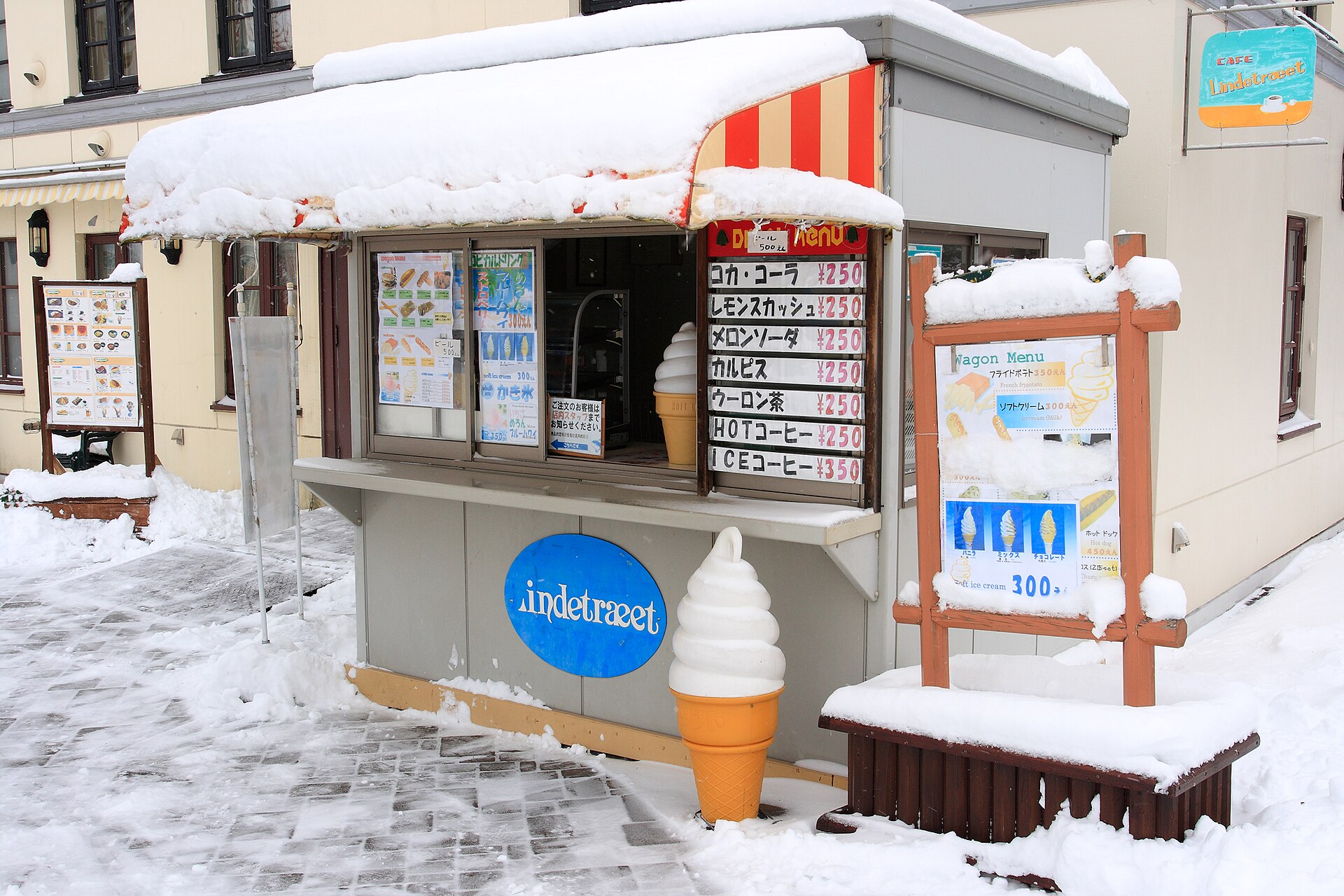
Photo: MiNe / CC BY 2.0 / Wikimedia Commons
FAQ
Noboribetsu Jigokudani stays open all winter with no entry fee and no opening hours, and the valley alone takes about 30 minutes on foot. The road to Lake Oyunuma and Lake Kuttara is closed from November 9, 2026 to April 16, 2027, so those stops drop out of a winter visit.
Can you walk around Noboribetsu Jigokudani in winter?
Yes. The tourist association’s winter notice lists Noboribetsu Jigokudani and the Oyunuma River Natural Footbath as the main places open in winter. Jigokudani has no entry fee and no opening hours, and the observation deck is a 3–5 minute walk from the parking lots. How far the boardwalk into the valley stays open is not stated, so follow the ropes and signs on site.
Which trails at Noboribetsu are closed in winter?
The road to Lake Oyunuma and Lake Kuttara (Route 350) is closed from November 9, 2026 to April 16, 2027, and the Oyunuma parking lot from late November to late April, which takes Lake Oyunuma, Lake Kuttara, Okunoyu and Mt. Hiyori off a winter visit. The path into the Oyunuma River Natural Footbath from the Lake Oyunuma side is also closed; in winter, only the Sekisuitei-side entrance is passable. The latest winter trail notice is dated December 27, 2023 and was still the newest on November 19, 2026, so check the association’s news page before you go.
How long does it take to walk Jigokudani in the snow?
About 30 minutes for Jigokudani alone, matching the tourist association’s 30-minute walking course with a 20-minute stay in the valley. Allow about an hour if you add the Oyunuma River Natural Footbath, which in winter is an out-and-back walk from the Sekisuitei-side entrance. No official time is published for the winter footbath combination.
Summary
A winter visit to Noboribetsu Jigokudani is free and takes about 30 minutes for the valley, or about an hour with the Oyunuma River Natural Footbath. Check the tourist association’s news page before you go, because its latest winter trail notice dates from December 27, 2023.
- Noboribetsu Jigokudani is open all winter, free and without opening hours; the observation deck is 3–5 minutes on foot from the parking lots.
- The Oyunuma River Natural Footbath is reachable in winter from the Sekisuitei-side entrance only.
- The road to Lake Oyunuma and Lake Kuttara is closed from November 9, 2026 to April 16, 2027 (the Oyunuma parking lot from late November to late April), so Lake Oyunuma, Lake Kuttara, Okunoyu and Mt. Hiyori are summer stops.
- Allow about 30 minutes for the valley and about an hour with the footbath.
- From New Chitose Airport, the direct bus leaves at 13:20, 14:10 and 15:10 (reserved seats only); otherwise take JR to Noboribetsu Station and the ¥450 Donan Bus, paying in cash.
- The winter notice dates from December 27, 2023. Check the association’s news page for changes and event closures before you go.
Checked on November 19, 2026 against the tourist association, the Natural Parks Foundation (Noboribetsu branch), Noboribetsu City, Donan Bus and JR Hokkaido. Closed sections and periods can change with snow and ice.