
Last checked: November 8, 2026
The best time to see drift ice in Hokkaido is early to mid-February. Japan Meteorological Agency (JMA) normals put the day the ice reaches the shore at February 4 in Abashiri and February 9 in Monbetsu, so a late January trip often sees only a white line on the horizon. If seeing ice matters more than anything else, go in late February, and keep one indoor backup in the plan whatever dates you pick.
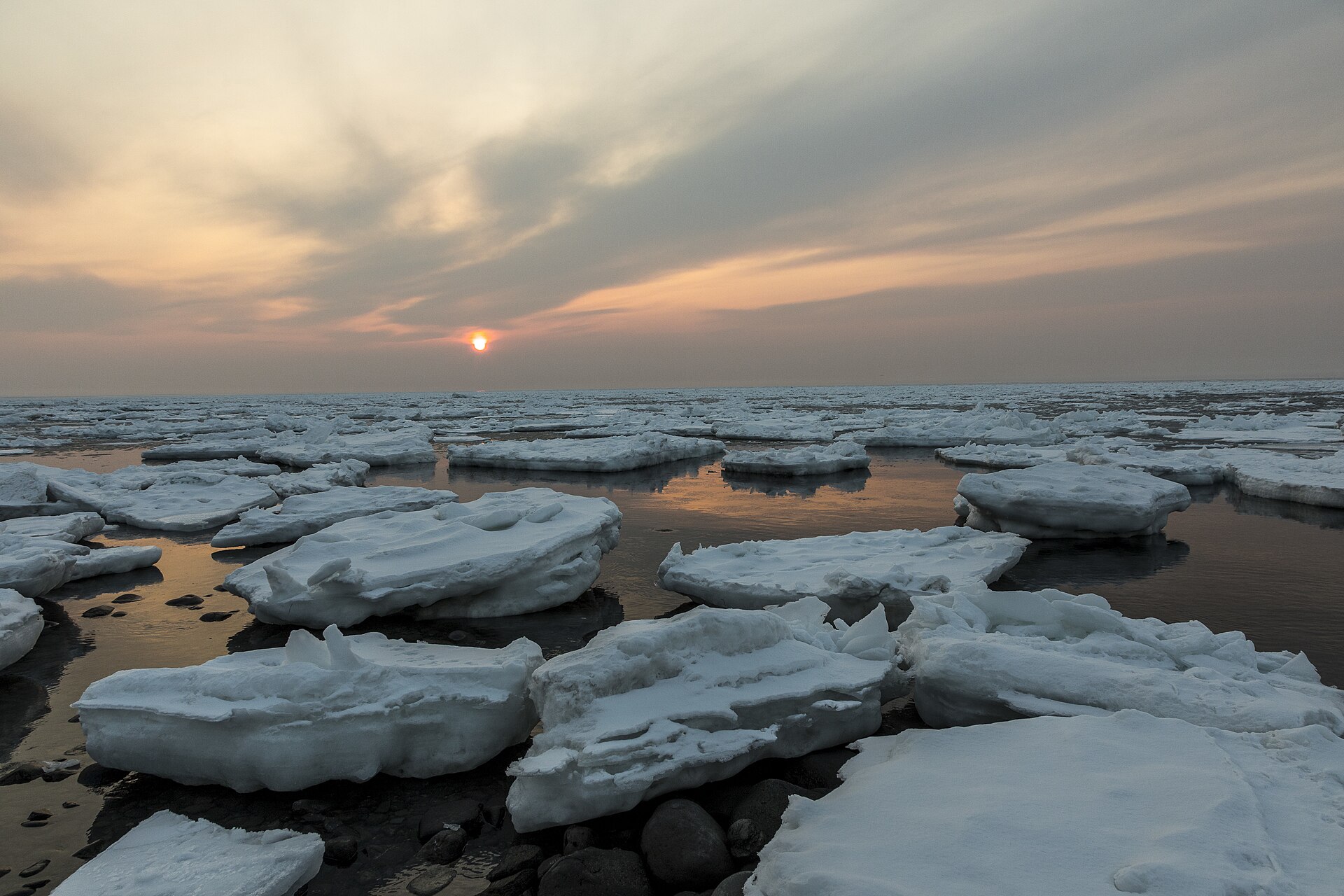
Photo: kkawamura / CC BY 4.0 / Wikimedia Commons
- Quick answer
- First sighting and shore arrival are different dates
- JMA normal dates for Abashiri, Monbetsu and other ports
- How far the dates have swung: record early and late years
- Abashiri or Monbetsu?
- What happens to the icebreaker cruise when there is no ice
- Where to check ice conditions before you go
- Backup plans if the ice does not come
- When to book
- Getting there
- Tips for international visitors
- FAQ
- Summary
Quick answer
Early to mid-February gives the best balance of ice and boat departures, and late February is the safer choice if you can only go once. Late January is a gamble.
| When you go | What the JMA records show | How to read it |
|---|---|---|
| Late January | Ice is first sighted offshore at Abashiri around January 22 on average but has not reached the shore. In 2025 the first sighting came on February 15. | A gamble: ice in the distance, or none |
| Early to mid-February | Past the normal shore arrival at Abashiri (February 4). Monbetsu follows around February 9. | The main target, with the most Aurora departures |
| Late February | Abashiri’s latest shore arrival on record is February 22 (2016). | The safest window so far (records are not a guarantee) |
| Early March | The normal last day of ice at Abashiri is April 6, but in 2015 it was March 8. | Still possible, with large swings |
| Fixed dates | No date is certain. | Plan a day that works without ice |
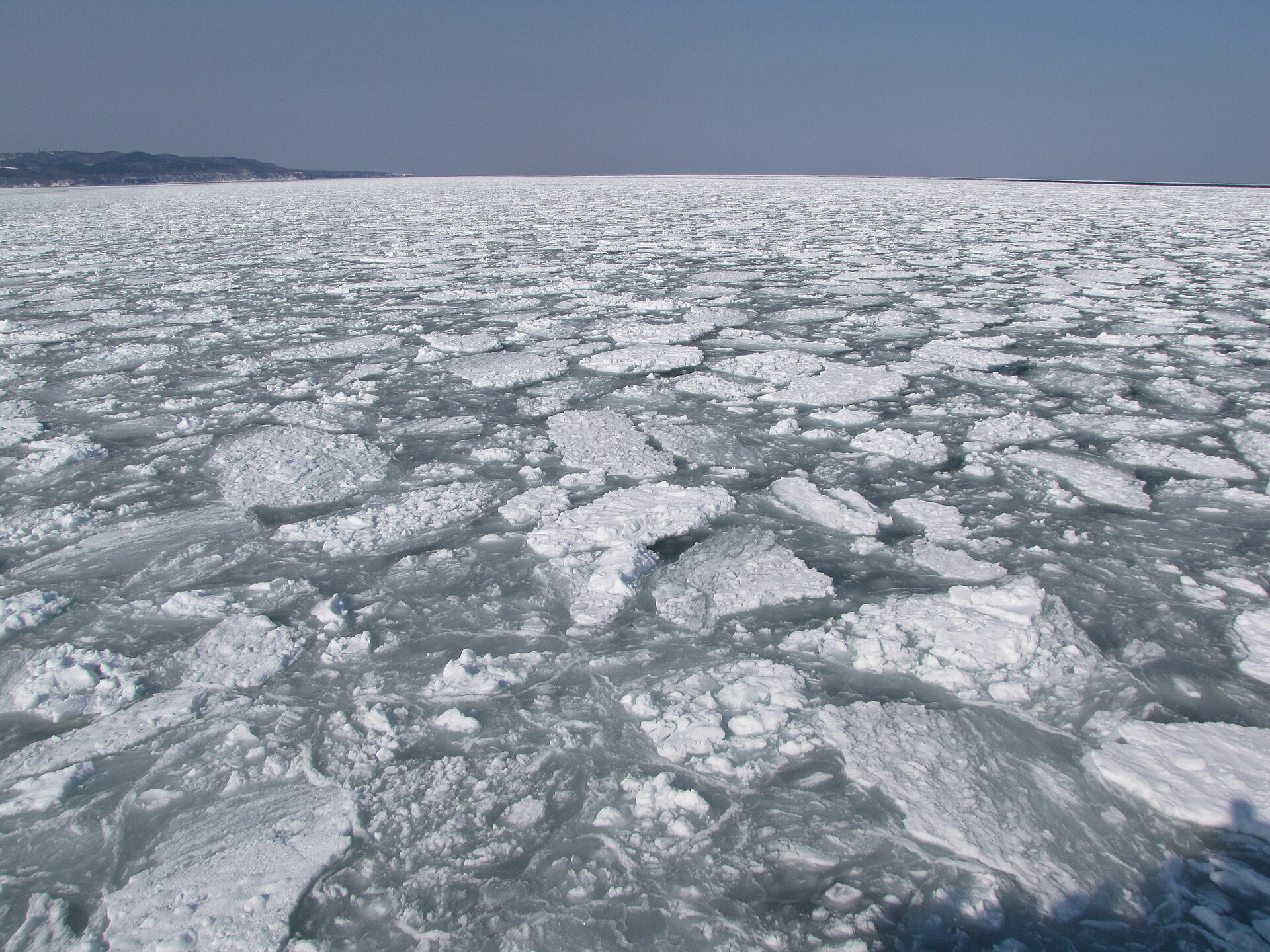
Photo: Muramasa / CC BY-SA 3.0 / Wikimedia Commons
First sighting and shore arrival are different dates
JMA publishes two start dates for drift ice, and at Abashiri they are 13 days apart in a normal year (January 22 and February 4). The first sighting (ryuhyo shojitsu, 流氷初日) is the first day ice is visible anywhere on the sea. Shore arrival (ryuhyo setsugan shojitsu, 流氷接岸初日) is the first day the ice reaches the coast, or joins the ice fixed to it, so that the coastal channel disappears and ships can no longer pass.
Pages that say the season starts in late January are usually describing the first sighting. The view most visitors picture, with ice from the beach to the horizon, comes after shore arrival. That gap is why a late January trip can end with only a white band far out at sea.
JMA normal dates for Abashiri, Monbetsu and other ports
Abashiri’s normal shore arrival date is February 4 and Monbetsu’s is February 9, according to JMA’s table Sea ice observations on the Hokkaido coast: normals and extremes (Japanese, updated December 9, 2025). The normals cover 1991–2020, and the number in brackets is how many years of observation went into each one.
| Station | First sighting | Shore arrival | Last day of ice | Ice season |
|---|---|---|---|---|
| Abashiri (網走) | January 22 (30 years) | February 4 (30 years) | April 6 | 75 days |
| Monbetsu (紋別) | January 24 (17 years) | February 9 (17 years) | March 30 | 66 days |
| Omu (雄武) | January 25 | February 5 | March 28 | 63 days |
| Kitami-Esashi (北見枝幸) | January 24 | February 4 | March 28 | 64 days |
| Nemuro (根室) | February 11 | February 19 | March 29 | 47 days |
| Wakkanai (稚内) | February 19 | Not calculated (fewer than 8 years) | March 4 | 14 days |
The 17 years for Monbetsu do not mean the ice came in only 17 years. JMA ended observation at Monbetsu in 2007, so its normals use 1991–2007 only. Abashiri is the only station observed through all 30 years, which makes its numbers the best supported.
How far the dates have swung: record early and late years
The latest first sighting ever recorded at Abashiri was February 15, 2025, more than three weeks after the normal date, and visitors to Abashiri in January 2025 saw no drift ice. JMA counts records by ice year (December to May), so the 2002 ice year runs from December 2001 to May 2002. The table gives calendar dates, with records from the start of observation to May 2025. That was the last season JMA observed: its first and last sighting observations ended in 2025, according to JMA’s coastal sea ice statistics page (Japanese).
For the 2025–26 season, the Japan Coast Guard’s Abashiri station recorded the first sighting on January 26, 2026, the same day as the Coast Guard’s own normal, and the last day of ice on April 16, 2026. The Coast Guard lists this as a reference value because the station now observes on weekdays only, and it does not record a shore arrival date. Because a different agency and site made the observation, it cannot be compared directly with the JMA tables on this page (Ice Information Center sea ice statistics, Japanese, as of November 8, 2026).
| Record | Abashiri | Monbetsu |
|---|---|---|
| Earliest first sighting | December 27, 2001 (2002 ice year) | January 3, 1967 |
| Latest first sighting | February 15, 2025 | February 14, 1989 |
| Earliest shore arrival | January 8, 2001 | January 9, 1966 |
| Latest shore arrival | February 22, 2016 | March 26, 1989 |
| Longest ice season | 126 days (1953) | 113 days (1966) |
| Shortest ice season | 43 days (2009) | 24 days (1976) |
Abashiri’s record for the latest first sighting is recent, so older averages are no reason to relax. Start from the normal dates and shift later by the margin the late records show. JMA’s English page Sea ice in the Sea of Okhotsk (updated June 30, 2026) also describes a long-term decline in the maximum ice extent of the Sea of Okhotsk, about 3.7% of the sea’s area per decade.
Sea opening (umi-ake) dates are no longer published
Older guides sometimes say the sea opens (umi-ake, 海明け) in mid-March. According to the notes on the same JMA page, Abashiri’s observed items for 2022–2025 were only the first sighting and shore arrival, and JMA ended its first and last sighting observations in 2025, so no umi-ake date is announced. Do not wait for an umi-ake announcement when you plan the end of a trip.
Abashiri or Monbetsu?
Abashiri is the better choice if seeing drift ice is the main goal. Its normal shore arrival is 5 days earlier than Monbetsu’s, its ice season is 9 days longer, and its normals rest on 30 years of observation. Monbetsu makes sense if you want the Garinko-go ride itself or are going from mid-February, when the difference narrows.
| Abashiri | Monbetsu | |
|---|---|---|
| Normal shore arrival | February 4 | February 9 (5 days later) |
| Normal ice season | 75 days | 66 days |
| Years behind the normals | 30 (1991–2020) | 17 (1991–2007; observation ended in 2007) |
| Icebreaker | Aurora / Aurora 3 | Garinko-go (Garinko III IMERU) |
| Nearest airport | Memanbetsu Airport | Okhotsk Monbetsu Airport |
Abashiri also has more to do on a day without ice: Cape Notoro, the Abashiri Prison Museum and the Okhotsk Ryu-hyo Museum. Garinko-go breaks the ice with large drills on its bow, which works differently from Aurora, so the ride can be a reason to choose Monbetsu.
You can also do both. The Eastern Hokkaido Express Bus route No. 1 (official English page) runs from Monbetsu to Abashiri and on to Utoro from January 29 to February 28, 2027. It leaves Monbetsu Garinko Station at 10:15 and stops 150 minutes at the Aurora terminal, long enough to ride Aurora if you book the boat yourself. The adult fare from Monbetsu to Abashiri is ¥5,900, and seats must be booked at least 5 days ahead (checked November 8, 2026).
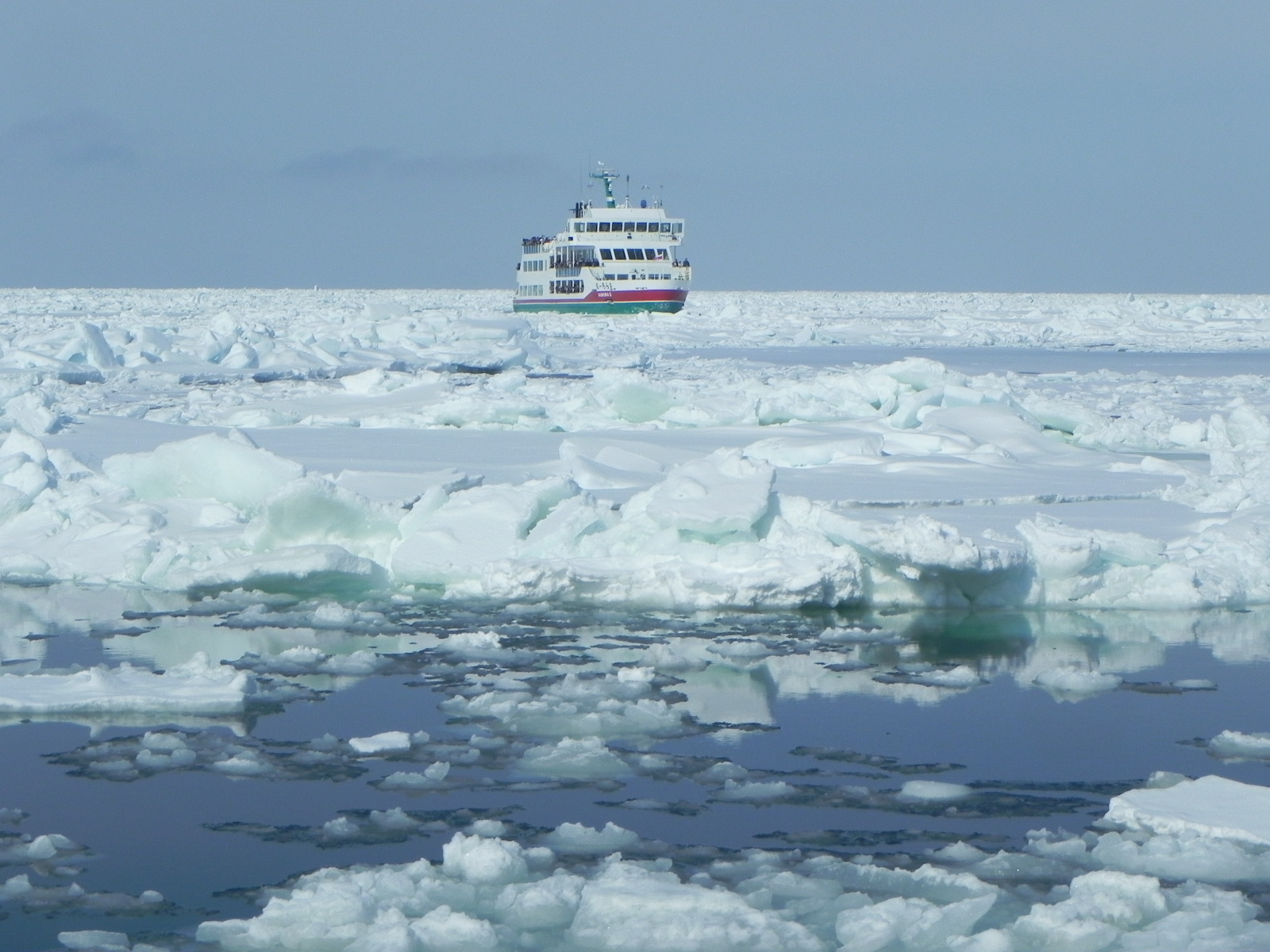
Photo: pakku / CC BY 3.0 / Wikimedia Commons
What happens to the icebreaker cruise when there is no ice
The large ship Aurora in Abashiri still sails when there is no drift ice, as a sightseeing cruise to Cape Notoro, while the small ship Aurora 3 is cancelled. The operator states this on its timetable page in Japanese and English. A ticket bought for the ice becomes a ticket for a different route, not a refund.
Ice alone does not guarantee a sailing. Each ship may be cancelled if too few passengers book, and wind and waves can cancel a sailing or change the route, so check the operating status on the morning of the cruise.
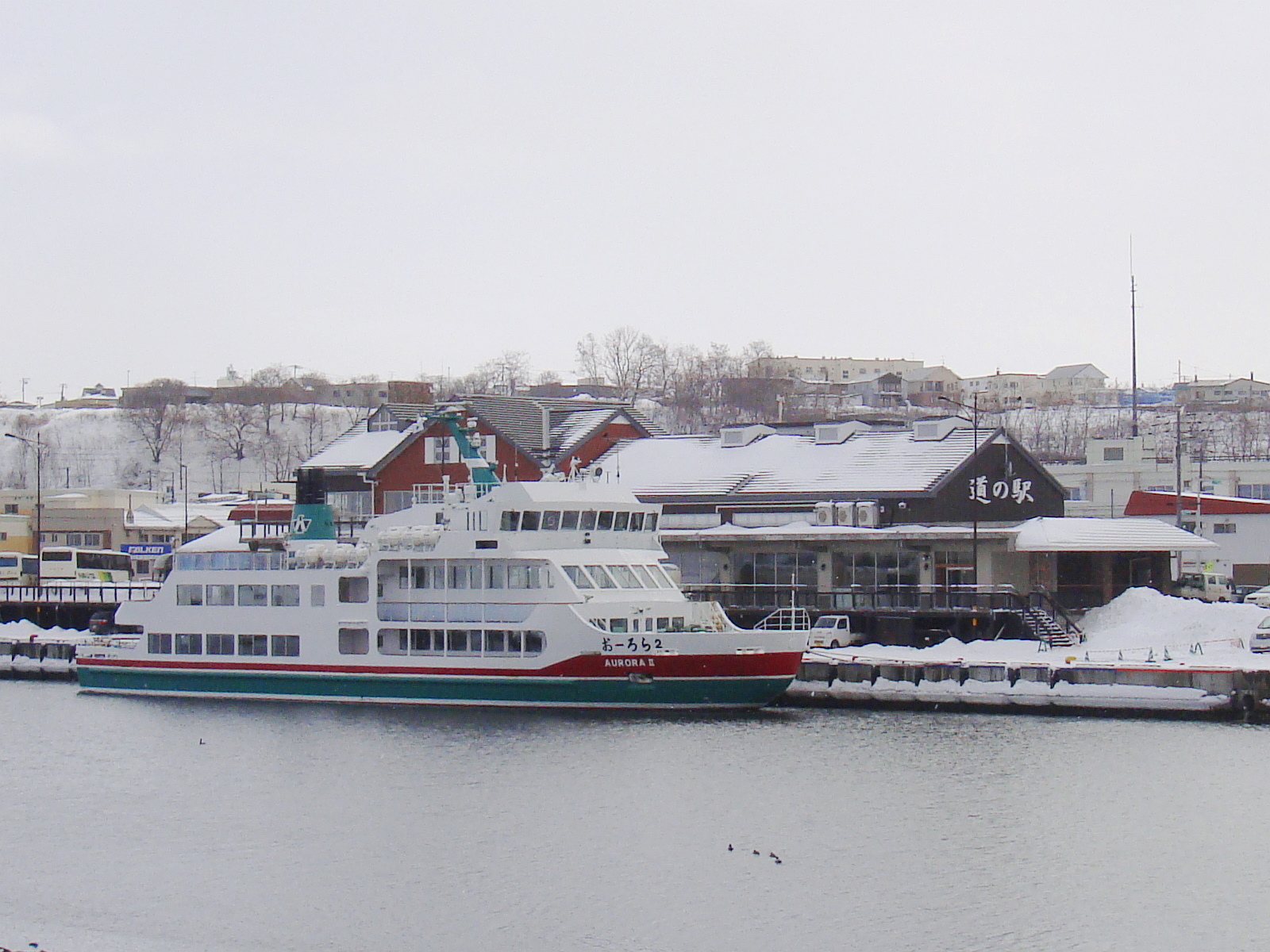
Photo: 221.20 / Public domain / Wikimedia Commons
Aurora (Abashiri): fares and timetable
Aurora runs from January 20 to March 31. The fares below are listed for the offshore route with drift ice and include tax (official site, checked November 8, 2026). The fare table does not list a price for the Cape Notoro cruise.
| Aurora (large ship) | Aurora 3 (small ship) | |
|---|---|---|
| Season | January 20–March 31 | Listed as planned for March, 9:00 and 13:00, both marked as extra sailings |
| Duration | About 1 hour | About 2 hours |
| Adult (junior high school and older) | ¥7,000 | ¥9,800 |
| Elementary school student | ¥3,500 | ¥4,900 |
| Preschool child | Free | Free |
| Special seat | +¥500, paid on board | None |
| No drift ice | Cruise to Cape Notoro | Cancelled |
From January 20 to 31 the large ship leaves at 9:00, 11:00, 13:00 and 15:00. In February it leaves at 9:30, 11:00, 12:30, 14:00 and 15:30, plus extra sailings at 8:00 and 16:45. From March 1 to 14 the times are 9:30, 11:00, 12:30, 14:00 and 15:30, and from March 15 to 31 only 9:30, 11:30 and 13:30. Extra sailings take bookings only once confirmed, so do not plan around them. Complete boarding procedures about 20 minutes before departure.
Aurora’s online booking had not opened yet. On November 8, 2026 the reservation page said web reservations are planned to start in early November and the date may change. The operator’s FAQ says you can board without a reservation if seats are left, but may be turned away when the ship is full.
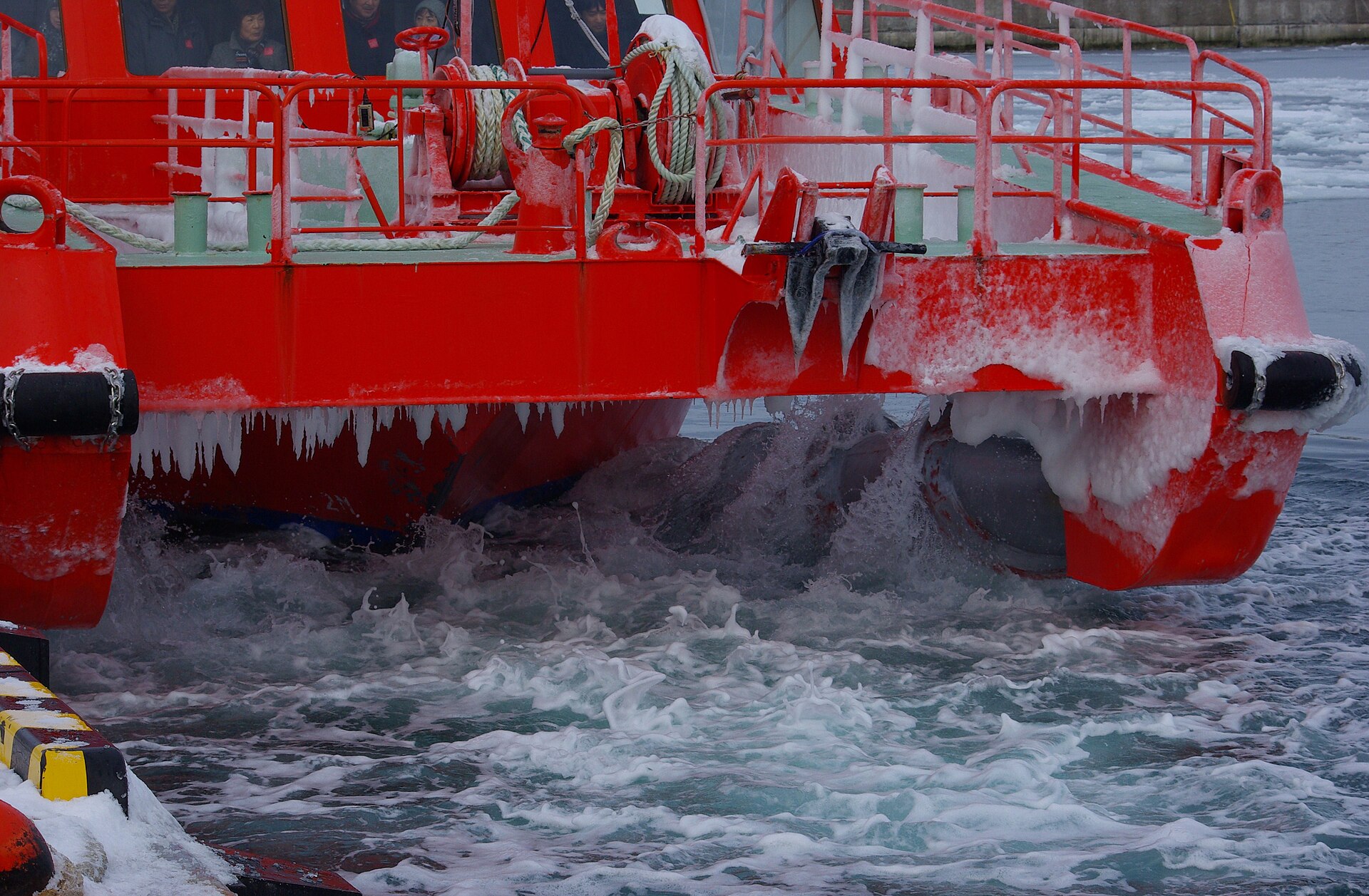
Photo: hj695gz / CC BY 3.0 / Wikimedia Commons
Garinko-go (Monbetsu): season, booking and fares
Garinko III IMERU runs daily from January 15 to March 31, 2027, and bookings opened on October 9, 2026 (Garinko-go official page). Visitors living outside Japan book on the multilingual booking site; residents of Japan use the Japanese form, so a mixed group makes two bookings. The multilingual site lists the winter cruise at ¥5,000 for adults (13 and older), ¥2,500 for ages 6 to 12, and free for 5 and under (checked November 8, 2026).
Cancellation fees are 10% from 14 days before the cruise, 30% from 7 days before, 50% on the day before and 100% on the day. The Japanese page adds that they apply even when you cancel because the ice is not visible. The fare is refunded if the cruise is cancelled for bad weather or because fewer than 15 people booked. Passengers who could not see drift ice on their cruise receive a free Second Chance discount ticket for another winter cruise.
Where to check ice conditions before you go
Two official sources show where the ice actually is. Use the Japan Coast Guard’s sea ice charts one to two weeks before you leave, and JMA’s coastal report plus the boat operator’s status page from the day before.
- The Ice Information Center (1st Regional Coast Guard Headquarters) has an English page with sea ice charts during the ice season. They show how far south the ice has spread, which gives a rough idea of when it will reach the coast.
- JMA’s coastal sea ice information for Hokkaido (Japanese) covers waters within 20 nautical miles of Wakkanai, Abashiri and Kushiro, with an outlook to the next day, issued daily around 8:00. Monbetsu is not covered, so use the Coast Guard charts for Monbetsu.
Aurora decides whether to sail about one hour before each departure, posts the status on its website and does not contact passengers when a sailing is cancelled.
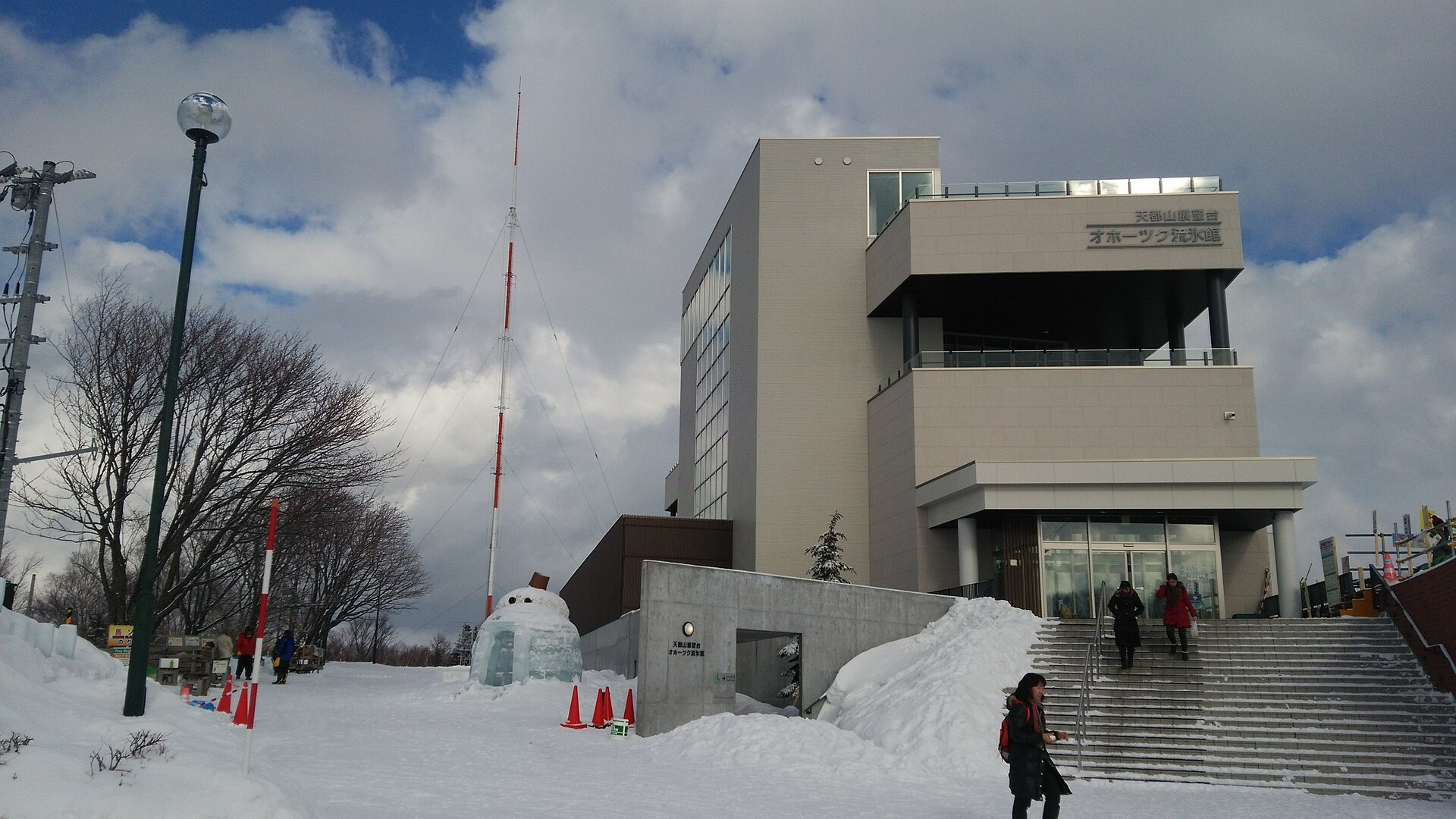
Photo: ながいの / CC BY-SA 2.0 / Wikimedia Commons
Backup plans if the ice does not come
If your dates are fixed, put at least one stop in the plan that works without ice. The Okhotsk Ryu-hyo Museum is the most reliable, because it shows real drift ice all year. Book that for certain, and choose a boat sailing after checking the ice report on the day.
- The Okhotsk Ryu-hyo Museum (オホーツク流氷館) on Mount Tento displays real drift ice and has a below-freezing room.
- The Abashiri Prison Museum (博物館 網走監獄), one of Abashiri’s main sights, is mostly indoors and works in bad weather.
- Cape Notoro (能取岬), where Aurora goes when there is no ice, can also be reached by road.
- Aurora 3 is cancelled without ice, so booking it means taking the full ice risk. The large ship still goes out.
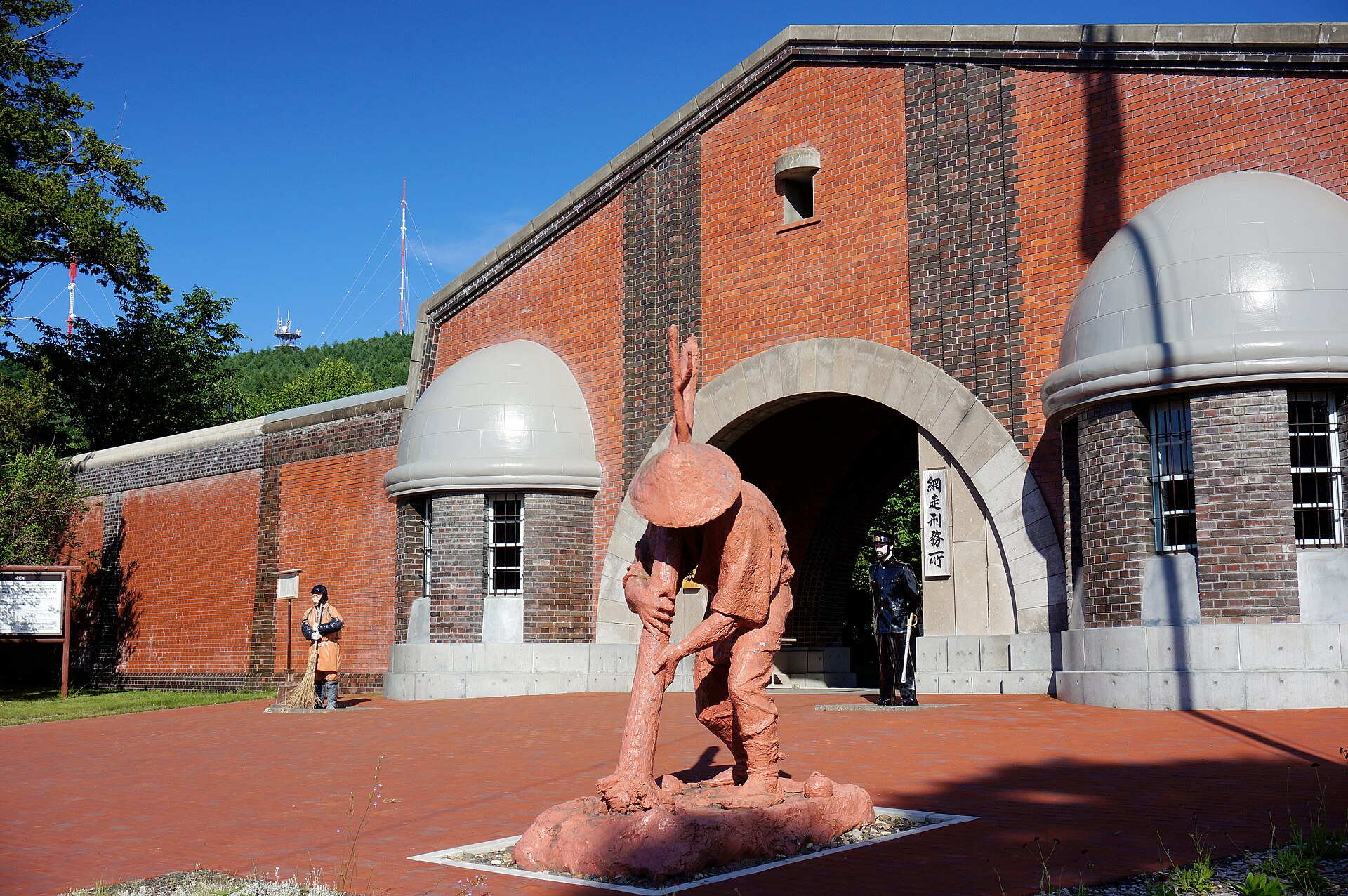
Photo: 663highland / CC BY 2.5 / Wikimedia Commons
When to book
Demand peaks in early to mid-February, so book in this order:
- Flights. JAL opens domestic bookings 360 days before the flight date and ANA 355 days before. Memanbetsu and Okhotsk Monbetsu have few flights, so book these first.
- Hotel. Abashiri and Monbetsu have few places to stay, and February weekends fill up first.
- Boat. Garinko-go is already taking bookings, and Aurora’s web booking is planned for early November 2026.
Getting there
Abashiri is the easier base without a car. Memanbetsu Airport’s English access page lists a shuttle bus to Abashiri Bus Terminal (about 35 minutes, ¥1,050) that connects with all scheduled domestic flights, and Aurora’s site says direct buses run to the boarding point from Memanbetsu Airport and JR Abashiri Station (checked November 8, 2026).
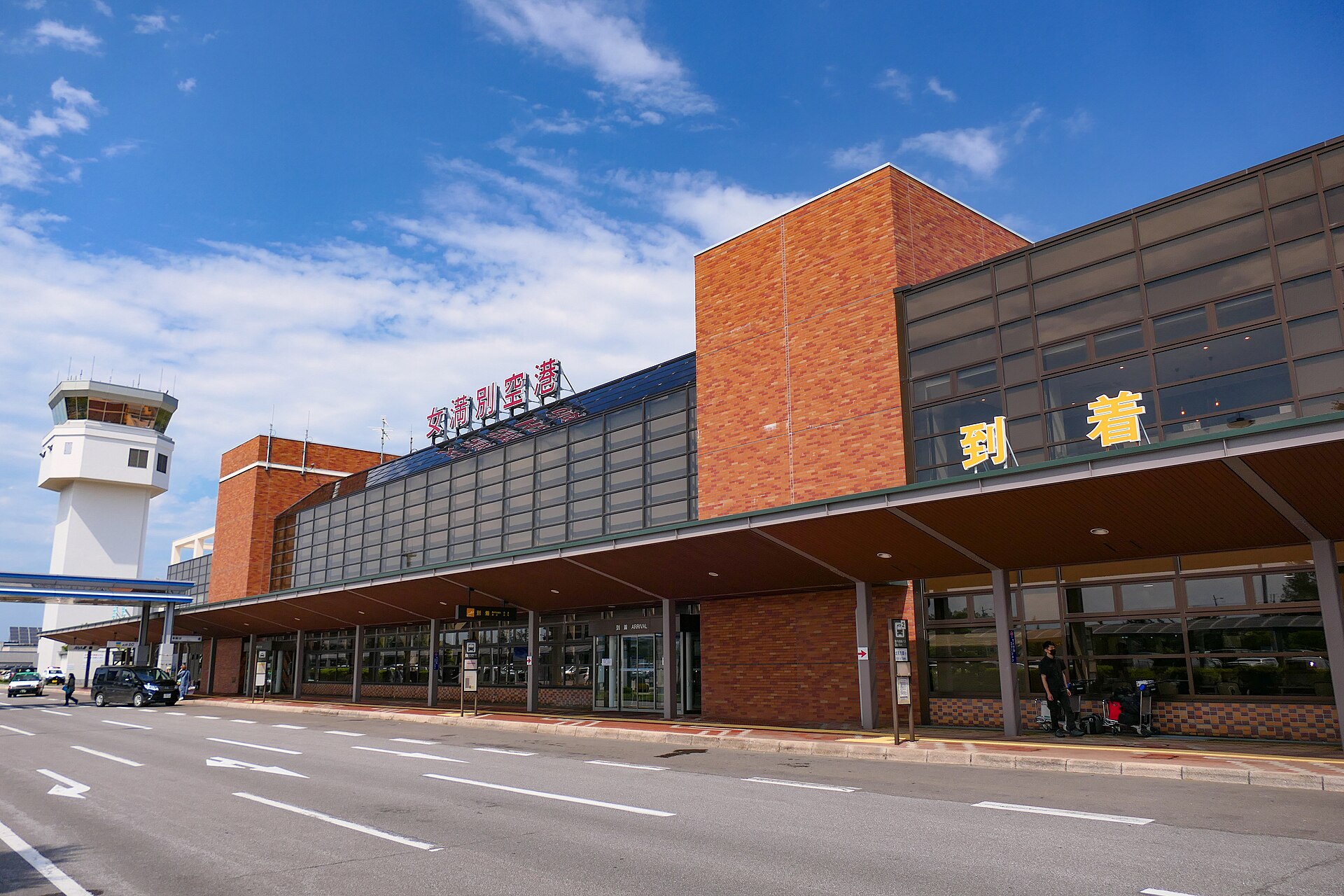
Photo: MaedaAkihiko / CC BY-SA 4.0 / Wikimedia Commons
Aurora boards at Michi-no-Eki Ryuhyo Kaido Abashiri, a roadside station with free parking and coin lockers. Garinko-go boards at the Ocean Communication Hall (Garinko Station) in Monbetsu, about 10 minutes by car from Okhotsk Monbetsu Airport and 15 minutes from Monbetsu Bus Terminal. The operator’s English FAQ says there is no direct bus from Memanbetsu Airport and public transport takes 4 to 5 hours, so it suggests a car or the seasonal express bus.
Photo: 221.20 / Public domain / Wikimedia Commons
Tips for international visitors
The operators’ English pages are shorter than the Japanese ones and sometimes out of date.
- Aurora’s English FAQ says payment is cash only, while its Japanese FAQ says major credit cards and code payments are accepted. Carry enough yen in cash for the fare.
- Garinko-go online bookings are paid by credit card in advance. The counter takes cash, credit cards and several QR code payment apps.
- Garinko-go check-in runs from 60 to 30 minutes before departure, and a completed passenger list is required for everyone on board.
- Aurora is heated inside, but most passengers watch from outside. Aurora gives winter temperatures in Abashiri of 0 to minus 10°C, colder at sea, and Garinko-go gives minus 15 to 0°C. Wear a thick coat, a hat and gloves.
- Aurora does not sell seasickness medicine and asks passengers not to fly drones. Garinko-go prohibits live streaming from the ship.
- JMA’s Hokkaido coastal ice pages (the normals table and the daily report) are in Japanese only. A browser’s translation function is enough to read the dates and maps.
FAQ
When is the best time to see drift ice in Hokkaido?
Early to mid-February is the best time to see drift ice in Hokkaido. JMA’s normal date for the ice reaching the shore is February 4 in Abashiri and February 9 in Monbetsu. For the highest chance, go in late February, since Abashiri’s latest shore arrival on record is February 22 (2016).
Is Abashiri or Monbetsu better for seeing drift ice?
Abashiri is better on the numbers: its normal shore arrival is 5 days earlier and its ice season 9 days longer than Monbetsu’s. JMA stopped observing at Monbetsu in 2007, so recent years cannot be compared directly. From mid-February the gap narrows, and choosing Monbetsu for the Garinko-go ride is reasonable.
Can I see drift ice in early February?
Often, yes. Abashiri’s normal first sighting is January 22 and its normal shore arrival February 4, so early February is when the ice usually reaches the shore there. It is not certain, though: in 2025 the ice was not even sighted offshore at Abashiri until February 15.
Does the icebreaker run if there is no drift ice?
In Abashiri, the large ship Aurora runs a sightseeing cruise to Cape Notoro instead, and the small ship Aurora 3 is cancelled. Garinko-go in Monbetsu gives a free Second Chance discount ticket to passengers who could not see drift ice on their cruise.
Summary
Plan around the shore arrival date, not the first sighting: February 4 in Abashiri and February 9 in Monbetsu in a normal year. Early to mid-February is the main target, late February is the safest window in the records, and late January is a gamble, as the record-late season of 2025 showed. Choose Abashiri for the odds, keep the Okhotsk Ryu-hyo Museum as a backup, and book flights, a hotel and the boat in that order.
